Joseph P. Cooper
Chesapeake Bay Maritime Museum, Uncurated Search Results
Type: Ram
Year: 1905
Builder: Sharptown M. R.
Location: Sharptown
These records are found in the collection of the Chesapeake Bay Maritime Museum in St. Michaels, Maryland. Uncurated search results are presented to give researchers and interested readers an idea of whether CBMM’s archives contain information about this vessel and whether it may be worthwhile to contact CBMM for further investigation. Uncurated results may be inaccurate or incomplete.
For more information about these items, contact the CBMM curator at collections@cbmm.org, or use the selection buttons below to submit a research request.
Search mode: Exact Name. Search phrase(s): "Joseph P. Cooper"; "Joseph P Cooper". Results returned: 8. Results displayed in this table: 8.
Use these buttons to send uncurated search results to your own app or text document for further research. First, check the box for any row, or click "Select All" then uncheck any rows. Then click "Show Selections". You can then copy your selections from the text box and past them into your app.
| Fetch? | Row ID | Catalog # | Object Name | Title | Artist/Maker | Date Made | Place Made | Description | Full Image | CBMM Cat. Page |
|---|---|---|---|---|---|---|---|---|---|---|
| 1 | 8888.0045.0000.00 | documents | Talbot County Oyster Ground Surveys and Abandonmen | Range, Cir 01/01/1917 - 12/31/1968 | Talbot County Oyster Ground Surveys and Abandonments (1881-1905):NOTE: 5/18/2018 Plat of Oyster Lands at Ratcliffe is located in CSA 10A2.The collection is comprised of 76 oyster ground surveys and abandonments for Talbout County, Maryland. All 76 of these land, or deed, records were originally housed in the Land Record books of Talbot County, Maryland. Four of the deeds deal specifically with the abandonment of a specified oyster ground. The remaining 72 are surveys of oyster ground, with a select few being both surveys and abandonments. Although the records cover a 25 year period, most of the records were concentrated in certain years, such as 1882, the 1890s, 1901, and 1903. Nevertheless, the oyster ground surveys offer examples of many different Talbot County families, surveyors, clerks, Justices of Peace, bodies of water, and maps.BackgroundThe collection of oyster surveys and abandonments was salvaged by the donor, Ronald Lesher, from a storage room of the Talbot County Land Records prior to their disposal in 1995. Mr. Lesher donated the collection to the Chesapeake Bay Maritime Museaum in September 1995.For further information, see vertical files: Seafood Industry and Oyster Harvesting.SubjectsOyster Ground Surveys; Talbot County-Land Records, Talbot County--History, Families, Government Officials; Eastern Shore--Oystering, Geography; Seafood Industry--Chesapeake Bay | No image URL. | View | |||
| 2 | 8888.0001.0000.00 | documents | Howard I. Chapelle Papers | Chapelle, Howard I | Exact 01/01/1901 - | The papers of Howard I. Chapelle consist of notes, printed materials, articles by others, some plans and correspondence. Much of the material is not original, but is source material collected by Chapelle.<br /><br />The papers are divided into three basic sections: 1. Correspondence, 2. thematic folders, and 3. whole notebooks by Chapelle. Papers are arranged into the most specific topic heading as possible. However, a researcher would be advised to peruse the subject headings before beginning specific research. | No image URL. | View | ||
| 3 | 8888.0011.0000.00 | documents | Robert G. Henry, Jr. (1908-1970) Papers (1944-1965 | Range, Exa 01/01/1944 - 12/31/1965 | Robert G. Henry, Jr. (1908-1970) Papers (1944-1965).The collection is comprised of business papers, brochures, notes, correspondence and drawings of Robert Goldsborough Henry, Jr., naval architect. Some work from the Oxford Boatyard.Biographical BackgroundRobert G. Henry, Jr., a native of Talbot County, graduated-from Massachusetts Institute of Technology in 1932. He worked in New York for Sparkman and Stephens as a yacht designer,In 144Q Henry became wine president of the Oxford Boatyard, which had been purchased by Johnson Grymes. He managed the yard until about 1950.During World War II the Oxford Boatyard was engaged in Naval construction, repair and conversion,In 145Q Henry went to work for the Navy in Washington, D.C. He headed the division of small craft design, Henry designed boats for use in Viet Nam.4Henry designed many yachts throughout his career. His most popular design was the International (OxfordI 400. MAny were built and sailed on the Chesapeake Bay. He also designed many large ocean racers.In 1965 he collaborated fin writing Sailing Yacht Design. Scope and ContentThe materials are concerned with Henry's career as a naval architect. The most important papers are the boat plans. These papers are of use to researchers in yacht design.Subjectsboatbuilding; Henry, R. G. Jr.; yacht design; WWII naval construction Four series. Subject: Robert G Henry Jr | No image URL. | View | |||
| 4 | 8888.0059.0000.00 | documents | Captain Irvin S. Wheatley Ship's Papers<CR><CR>Backgro | Range, Cir 01/01/1885 - 12/31/1894 | This collection begins on CSC 15D1 and continues onto 15D2.Captain Irvin S. Wheatley Ship's PapersBackgroundA large number of documents were donated to the museum by Karen Potter a descendent of the Wheatleys through her paternal grandmother's family. The papers consist of bills, receipts, invoices, and business and personal papers, mostly related to the activities of the two-masted trading schooner Edward L. Martin during the last two decades of the 19'h century.What is known about Captain Irvin Steven Ralph Wheatley (January 19, 1860-March 14, 1941) can be gleaned from the papers in this collection, U.S. Census records, and an internet genealogy. Born January 19, 1860, he was from a large family of Galestown, Dorchester County, Maryland, about twelve miles from Seaford, Delaware. He was captain of the schooner Hattie C. Wheatley for some time before becoming captain of the Martin from about 1885 until 1894. He owned shares in the Martin varying from one-third to one-eighth at different times during those years. Subsequently he was captain of the schooner John Q. Ferguson from January 1895 until at least December 1896. Irvin Wheatley had five brothers, two of whom died as children. The survivors were: Luther Elijah (June 1858-December 1931); George Edward (November 1856-July 1927); and Albert Ellis (September 1873-February 1955), and Frederick Seth (August 1858-August 1874). Of these, Luther figures most prominently in this collection. From personal letters (Box 7), it appears that while Irvin Wheatley was busy as captain of various ships, Luther managed a farm Irvin owned near Galestown. Irvin Wheatley apparently retired from the sea about 1897 and also took up farming. In 1930 both Irvin and his wife, Effie L. (October 1, 1866-August 11, 1935), still resided near Galestown.The schooner Edward L. Martin's official No. was 135629. She was built by Stephen (?) W. Kinsey in Sussex County, Delaware in 1882. She was of 84.95 gross, and 80.70 net tonnage. Her dimensions in feet were 87.2 length, 23.6 breadth, and 6.8 depth. About 1942, after running through numerous owners, she was bought by John B. Conway, converted to power, renamed Honey B, and put into the "dude" boat trade. In 1953 she was bought by Hugh B. Emmons and was destroyed the same year by fire near Oxford, Maryland.Scope and ContentThe core of this collection is an extremely comprehensive set of commercial shipping documents covering the period from 1885 to 1894. These include shipping instructions from the consignee of cargo, charter parties (contracts between shippers and vessel owners, shipping articles (agreements between ship owners and crews), and numerous other papers relating to the shipping business. Of special interest in this collection are the papers related to two trips made by the Edward L. Martin to the Bahamas to pick up loads of pineapples. These papers include instructions, charter parties, articles, as well as the many customs forms, clearances, quarantine receipts, and health certificates required at U. S. ports and from Bahamian authorities. (At the time the Bahamas were part of the British West Indies.)Sub'ectsMembers of Wheatley family: Effie L., wife of IrvinAddie E., and Roxie E., daughters of Irvin Luther E., brotherPhenie, wife of Luther Albert E., brother George E. H., brotherStella (Estelle S.) sister.Owners of schooner Edward L. Martin (during Wheatley's tenure) Josephus CollinsWm. T. MooreWm. EllisGeorge EllisE. J. EllisIrvin S. Wheatley. Subject: Capt. Irvin S. Weatley | No image URL. | View | |||
| 5 | 8888.0087.0000.00 | documents | H. M. Rowe & Co., Oyster Packers:BackgroundI | Range, Cir 03/01/1882 - 07/31/1887 | H. M. Rowe & Co., Oyster Packers:BackgroundIn 2001 the museum purchased four large, leatherbound books consisting of volumes labeled "Ledger", "Journal", "Cash", and "H. M. Rowe & Co." The latter contained no readable entries. The Journal contained entries from 1 March 1882 through 31 August 1885; Cash had entries from 1 September 1885 through 16 July 1887; and the Ledger covered the period from 1884 through July 1887.Wood's Baltimore City Directory, 1874 (Baltimore: John W. Woods), at p. 492, lists "Rowe, H. M. & Co (H. M. & W. H. Rowe) oyster packers, 68 Boston". Also, H. M. Rowe is listed at "393 e Pratt", and Wm. H. Rowe is listed at "395 e Pratt". Finally, James B. Rowe, bookkeeper, is listed at "393 e Pratt". From this it is evident that the Rowe company was in the oyster packing business as early as 1874. Information contained in the three volumes suggests that the company ended its business in July 1887. Polk's Baltimore City Directory, 1902, has no listing for the company.In 1882 Joseph W. Brooks (1832-1915) built a schooner named H. M Rowe at his yard in Dorchester County, MD. (See Pete Lesher, "The Industrious Shipbuilder: Joseph W. Brooks" (The Weather Gauge, v. 36, No. 1, Spring 2001, pp. 3-11 and 33). A photo at p. 7 shows the Rowe with her homeport as Deals Island. The vessel's first owner was Caleb J. Moore whose connection with the Rowes is not known. As shown below, however, the Rowe company purchased oysters from the vessel over several years.Scope and ContentThe Journal and Cash volumes reflect receipts and disbursements over a five-year period. Many of the disbursements were small amounts to the three Rowes; many others were to named recipients or for such expenses as stamps, labels, etc.The Journal (pp. 1-239) is of interest because it shows on a day-by-day basis all receipts and disbursements from 1 March 1882 through 31 August 1885. Disbursements cover everything from postage stamps, newspaper purchases (New York Herald, Baltimore American), payments to the Rowes and their employees, to payments for oysters delivered by ships. Among many vessels to which payments were made were the sloop Morning Light, and schooners Sea Belle, Sharps Island, Nautilus, Exchange, H. P. Barnes, Maid of Erin, Ann Virginia, Two Brothers, and Lewis Taulane. Of special are payments to the schooner H. M Rowe. These began on 6 October 1882 with the entry (p. 45) showing a payment of $50.00, and the entry "name & colors". Subsequent entries show payments to the vessel throughout the years 1882 until 19 January 1885. Most payments were for relatively large amounts apparently for cargos of oysters: examples are payments of $315.00 on 8 December 1882 (p. 61), $511.56 on 27 December 1882, and $455.05 on 11 January 1883.However, the key portion of the collection is contained in the Ledger. Between pages 70 and 261 the entries show shipments of oysters to numerous buyers in a variety of states and Ontario, Canada. Each entry shows the date of shipment, the quantity shipped (barrels, half-barrels, kegs, tubs), the grade of the shipment(standards, selects), the price of the shipment, and the payment dates and amounts, almost always in cash. The Ledger also shows that each of the Rowes owned one-third of the value of the assets of the company (pp. 4-5), but that H.M. Rowe held the most capital (pp. 30-43). Although the Rowes were all partners in the firm, we do not know what their relationship was to each other.A second important part of the Ledger reflects payments for merchandise to numerous individuals and companies (pp. 301-329).In short, although this company was only one of many oyster packers and shippers in Baltimore during the period covered by these volumes, clearly its business was widespread and apparently lucrative: when the company apparently wound up its business on 16 July 1887, the total capital split among the Rowes was about $21,665, a fair amount for the time. | No image URL. | View | |||
| 6 | 0000.1295.0862.00 | photographic prints | Ram Joseph P. Cooper tied up at Miami | Range, Exa 01/01/1907 - 12/31/1907 | No Address - Miami - FL | Ram Joseph P. Cooper tied up at Miami. Sails furled, one boom overboard, gaffs hoisted, tender alongside. For source, see 1295.0001. | No image URL. | View | ||
| 7 | 0000.1100 | photographs | Herman Hollerith, Jr. (1892-1976) Photo Collection | 1890-1970 | This is a collection of many photographs, which have not been cataloged individually. Please review the attachments for specific information on the images. <br /><br />Herman Hollerith, Jr. (1892-1976) Photo Collections (1890s--1970s) Biographical Background: Herman Hollerith, Jr. was born in 1892 at 3112 Q St., Georgetown, District of Columbia to Herman Hollerith, Sr. and Lucia Talcott Hollerith. His father invented the punch-card tabulating machine. He sold his company in 1911 to a firm that later became IBM. Other Hollerith children were Nan, Richard, Charles, Virginia and Lucia. The family lived in Georgetown, Garret Park and Montgomery County. In 1908 they bought a summer home in Mathews County, Virginia named Brighton. They spent their summers at Brighton from 1909. The family had a number of boats which were kept at Brighton: a New England dory named LUVINA; a flat bottomed power workboat named BRIGHTON; a 45 foot, gas powered yacht named REGINA, which was later renamed LUVINA and later still renamed MATOAKA, and an 85 foot vacht named LUVINA. The name Luvina was derived from the three daughter's names, Lucia, Virginia and Nan. Herman Hollerith, Jr. attended Worchester Polytechnic College with his borther, Charles, and received an engineering degree in 1917. He worked at the Naval Aircraft Factory in Philadelphia, and then at the Victor Talking Maching Company, where he was chief engineer and production engineer. During this time he lived in Riverton and Moorestown, New Jersey. He quit the Victor Talking Machine Company in 1928 when it was purchased by RCA. From 1932-1936 Hollerith was president of the Virginia Navigation Company and operated a small passenger steamer under contract to a large corporation. From 1936-39 he did not work during the Depression. In 1939 he moved to Baltimore to work for the Glenn L. Martin Company where he was involved in building airplanes during WWII. Hollerith worked until he was 69 years old. He was married twice. He and Sarah Valentine Fox had four children and were divorced in 1936. In 1938 he married Elisabeth C. Guest. In 1954 he bought a house near Oxford, Maryland and retired there in 1961. Hollerith was active in the early days ofnthe Chesapeake Bay Maritime Museum and was instrumental in the move of the Hooper Strait Lighthouse to the grounds. Hollerith had a love for boats and owned the ERIC, launched in 1925, until his death. This sailboat was an Atkins design based on a Norwegian ketch. ERIC was the prototype of the Westsai1 32. Hollerith died in 1976. For more information about the Hollerith family researchers should consult: HERMAN HOLLERITH: FORGOTTEN GIANT OF INFORMATION PROCESSING, by Geoffrey D. Austrian; NY: 1982, Columbia University Press. Scope and Content: This collection consists of photos taken or collected by Hollerith. The bulk of photos were taken by Hollerith of scenes from 1915-1940. They feature steamboat and sailboat scenes on the lower Chesapeake. Many of the photos were taken on cruises around Mathews County, Va. Some photos (especially M series negatives) were collected by Hollerith and taken by his father and brothers. The photos depict the agriculture life of the lower western shore and often show the introduction of power. Many of these photos have been published. The water was an important focus for life in Brighton. Mrs. Elisabeth Hollerith supplied a quote from Hollerith about life in Brighton: We did everything by boat, used the daily steamer from Norfolk for transportation to and from Washington and for most supplies including ice. Met the steamer at one of the wharves on the East River each day to pick up mail, visiting friends, etc. The roads were so bad we rarely went inland. Went to church and to visit our friends in a motor boat. In addition to the following subject indices, the researcher should note that Hollerith had his own subject indices. These are available to researchers and especially useful in looking for boat names. They are stored with the negatives. Subjects:Airplanes; Caribbean; C & D Canal; Eastern Shore; Hollerith, Herman, Jr.; Log canoes; Mathews county, Va.; Old Point Comfort, Va.; Sailboats, commercial; Seafood Industry; Steamboats, Chesapeake Bay; Washington, DC; workboats, Chesapeake Bay. Subject: Herman Hollerith Jr | 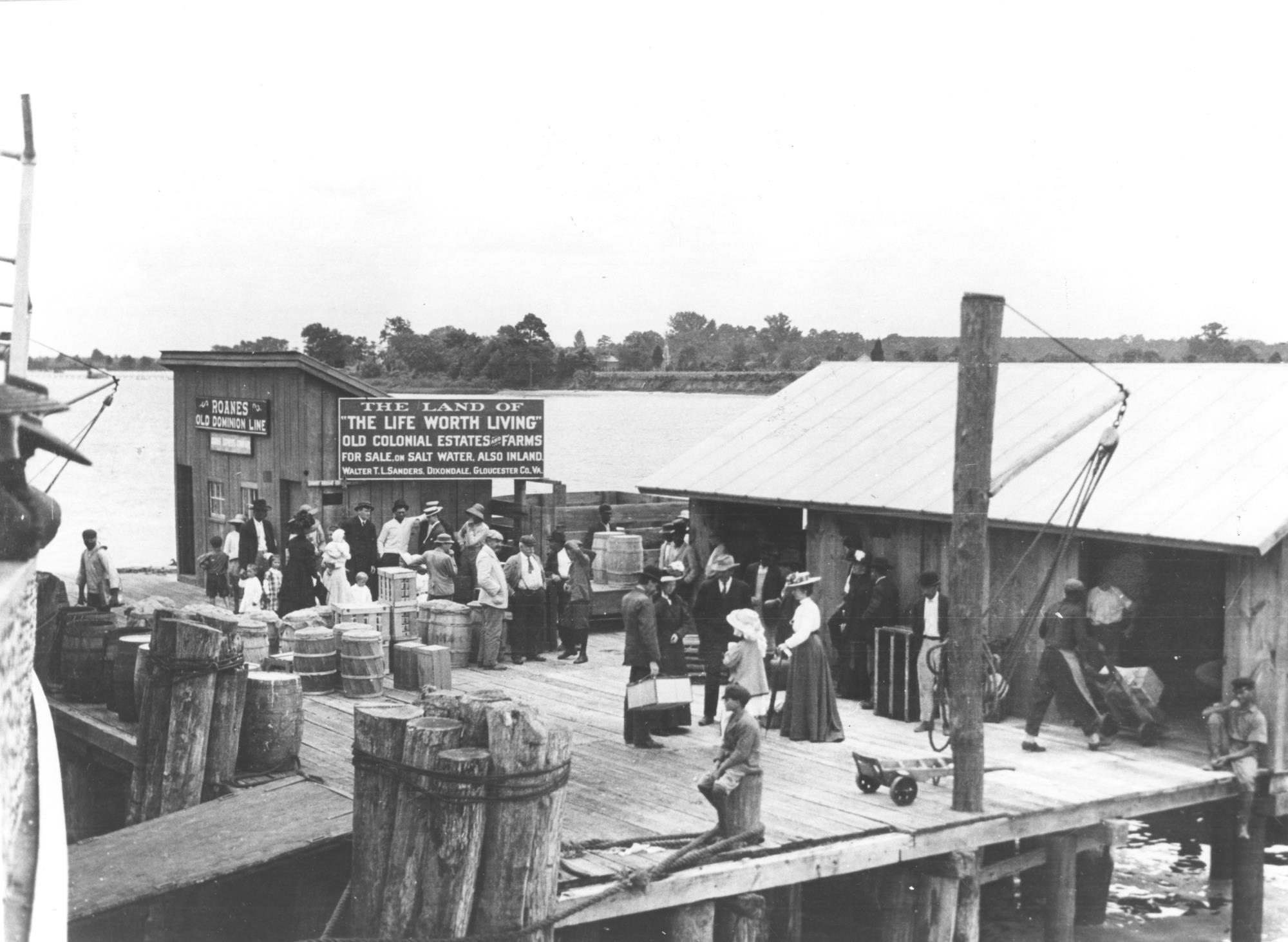 | View | |||
| 8 | 1997.0046.0001.00 | ships logs | Log book of Albemarle | Forbes, William __Writer | Log book of the Navassa Phosphate Company's Chesapeake Bay sailing vessel (bark) Albemarle of Baltimore documenting voyages between Baltimore and Navassa Island for guano. 70 pages, stiff board covers with decorative paper in blue and brown. Smaller loose pages in back. Material: Paper, cotton binding, cardboard, ink. Presumably kept by Capt Wm Forbes, found in grandmothers attic (Glenda Harris) | 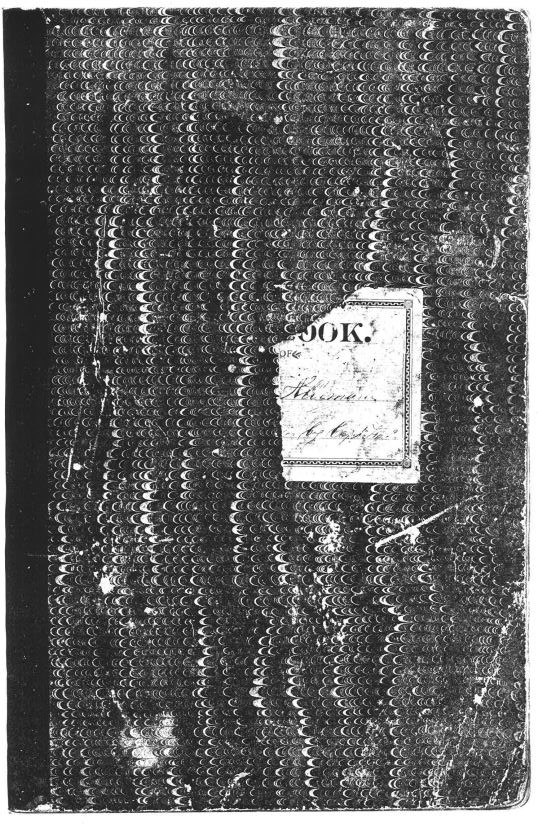 | View |
Created 2026 by Don Barker, CBMM volunteer, for the Chesapeake Shipbuilding Project. shipbuilding@sailingworkboats.es